
The Legacy
A painting. A place. Two strands of one thread.
The Great Shofar
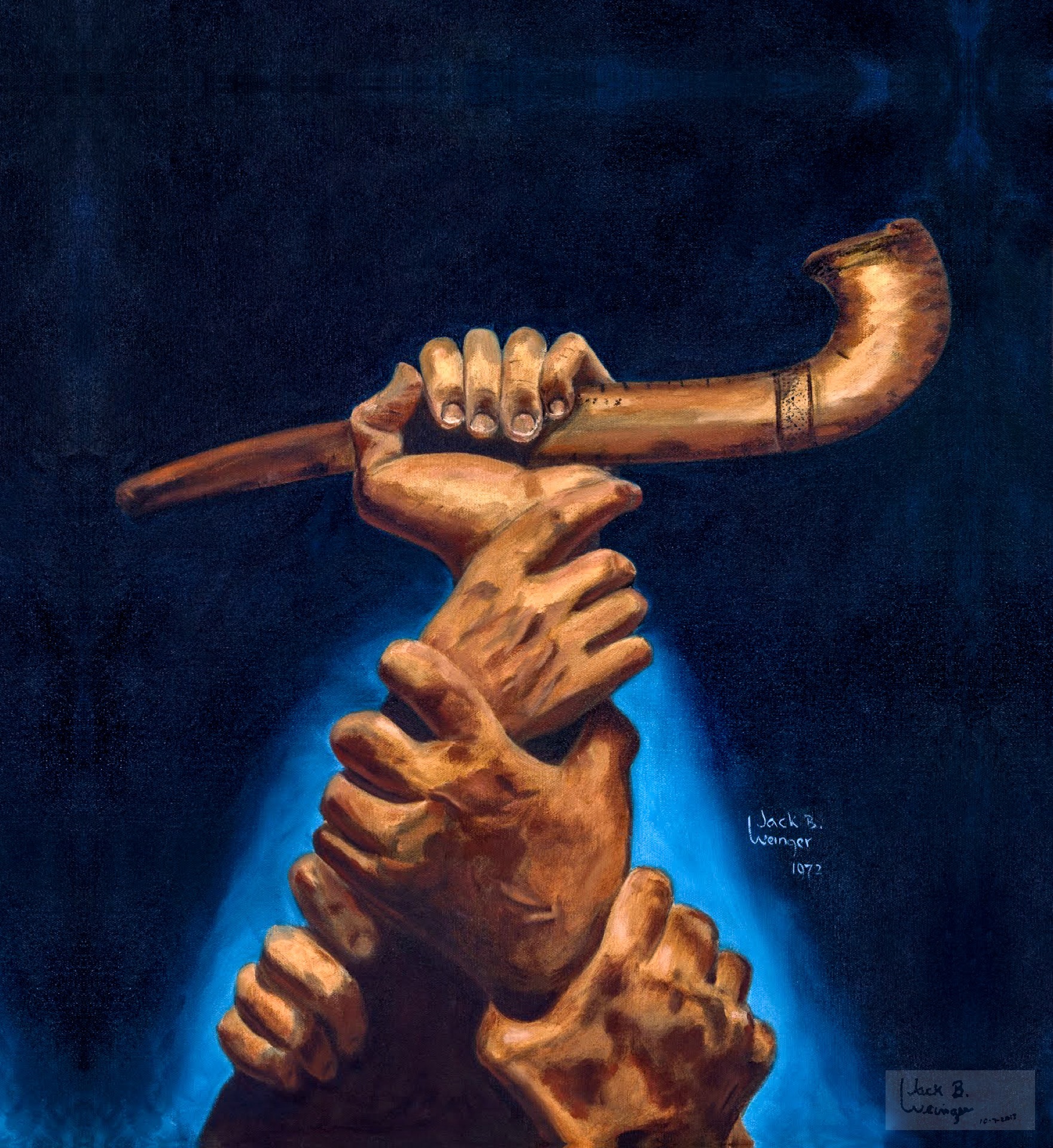
In 1972 an oil painting was completed by the hand of Jack B. Weinger. He called it "The Great Shofar."
It depicts the strength and victory of Am Yisrael (Nation of Israel), new life, and the cry of the Shofar calling the children of Israel home from the Diaspora.
The hands in the composition represent:
- The Five Books of Moses
- Generations of Jews emerging from the ashes of the Holocaust
- The rebirth of the State of Israel
- The Shofar of Redemption
The painting was completed one year before the Yom Kippur War.
The Print's Journey
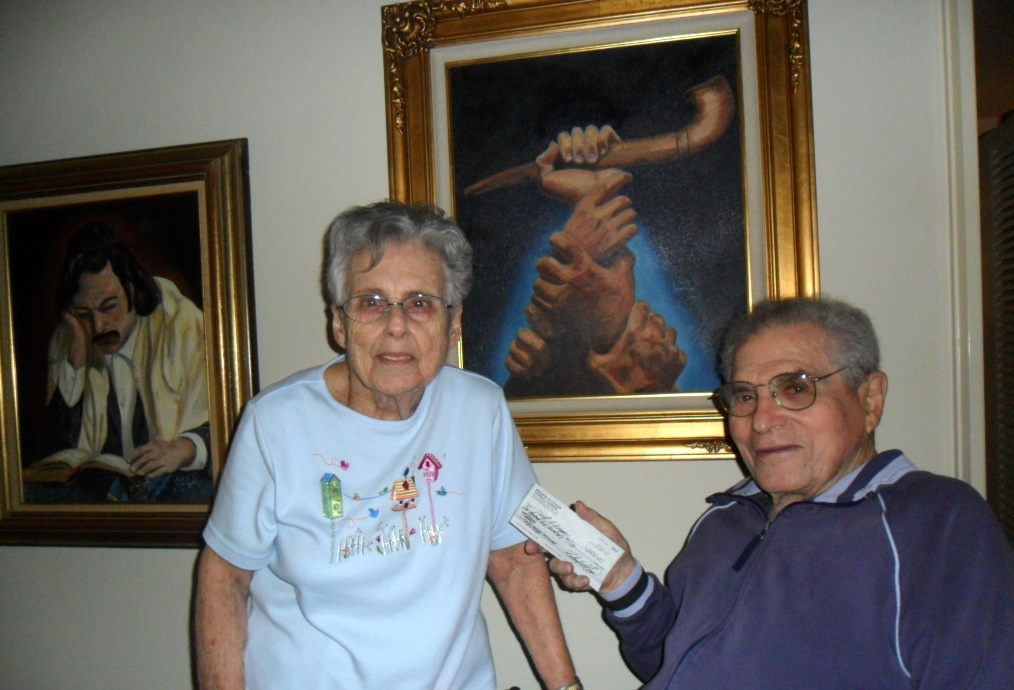
During a speaking tour in Texas in 2011, someone suggested creating prints for sale. The artist's father, then 93, famously replied:
"I've never sold a painting. I want to sell a painting in my lifetime."
Jack B. Weinger, at age 93
A Dallas couple subsequently purchased the original painting as a gift for the artist's son. Stamped, numbered Giclee prints of "The Great Shofar" now hang in over 190 locations worldwide, spanning from Jerusalem's Great Synagogue to private collections across multiple continents.
Rabbi Metzger's Account
Former Israeli Chief Rabbi Metzger's account of a family shofar from Poland.
When shown the painting in November 2011, Rabbi Metzger confirmed:
"The shofar buried in the sand on the Golan mountain looked like this."
He continued: "The shofar is something that comes from a behemoth, a ram!...the HaShem in the heaven took us out from the Holocaust...and blow the shofar to go out from the Diaspora. The Shofar of the Ge'ulah (Redemption)."
From Canvas to Bronze
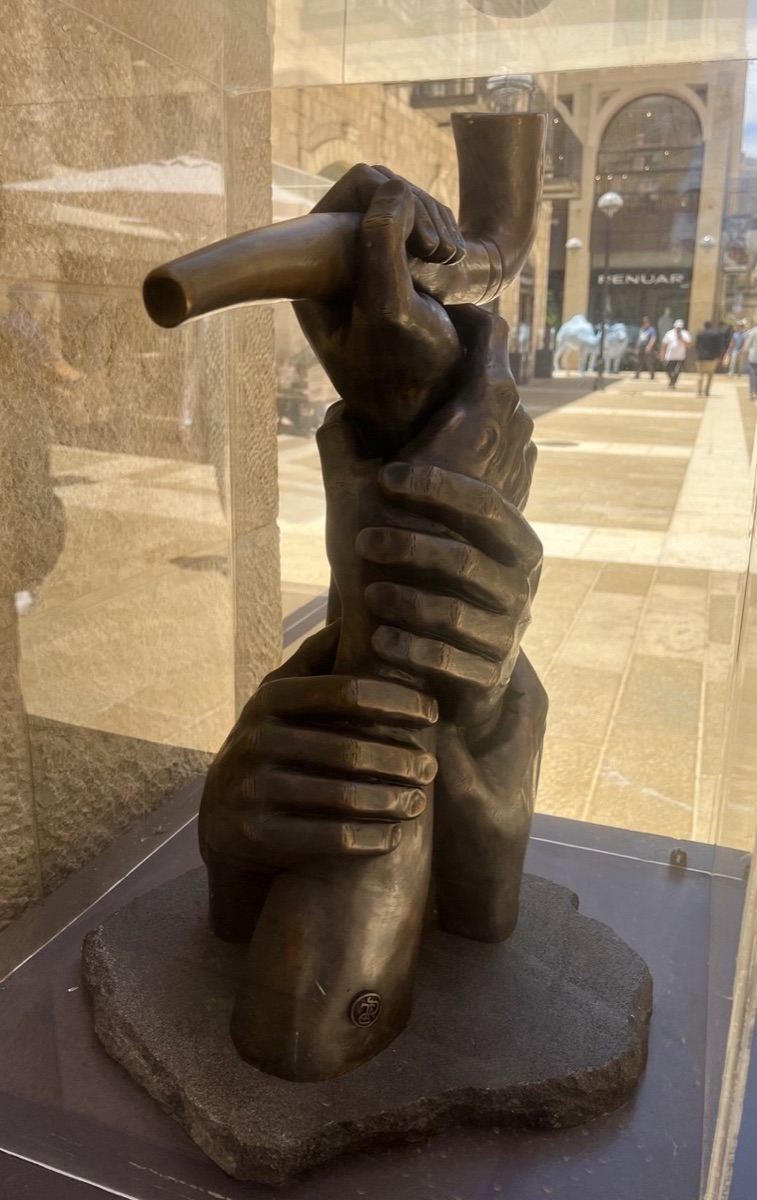
The vision of "The Great Shofar" transcended the canvas. A bronze sculpture was commissioned to render the painting's intertwined hands in three dimensions — each hand representing a generation, rising together to lift the shofar toward heaven.
The sculpture captures what the painting prophesied: the shofar is not held by one hand alone. It takes the strength of generations, united in purpose.
A Living Legacy
Jack B. Weinger was born September 3, 1917, during the Balfour Declaration year. His 100th birthday coincided with the Jubilee year of 2017.
He passed away September 23, 2017, at age 100. His death marked what his son calls "the end of an age and the beginning of what I believe is the Messianic Age."
The painting remains his enduring legacy, particularly in Israel at Beit Hogla.
Beit Hogla
A Very Special Place
Beit Hogla is a biblical town mentioned in the Book of Joshua, located near the northern tip of the Dead Sea on the frontier between the territories of Judah and Benjamin (Joshua 15:6, 18:19, 18:21).
The site sits in the Plains of Jericho, where Israel camped after crossing the Jordan River. Mount Nebo, where Moses spoke his final words, stands directly across the Jordan on the east bank.
Present-day Beit Hogla operates as an organic farm and community established in 2001 by Erna Covos. After 15 years of solo farming, families began settling there. The community now includes approximately 11 additional families.
Visitor Center & Tours
Beit Hogla has its own visitor center, offering:
- Group hosting and regional tours
- Historical and biblical education programs
- Access to nearby sites including Biblical Gilgal, Jordan Crossing, and ancient Beit Hogla ruins
- Prayers at Jericho synagogues (Shalom al Israel and Naaran)
- Tours of Tel Jericho, Hasmonean palaces, and priestly burial caves
- Monthly seminars featuring prominent rabbis discussing the Land of Israel
- All-night study sessions on Hoshana Raba eve
- Various Torah lectures and religious events
Visit Beit Hogla
Walk the land. See the painting. Hear the sound in the place where Joshua crossed.